Sexy Separates Underwear Collection Fashion Show
It Must Be Love: A Mustang Prairie RomanceThe Sexy Separates fashion show is the public debut of Trixie Beaumont’s lingerie brand and the clearest outward sign that her long-imagined clothing line has become a working business. Held at Dylan’s bar, the show converts private sketches, commercial risk, and painstaking preparation into a communal spectacle. Its success establishes Trixie not merely as the owner of Under the Skirt Online, but as a designer capable of creating a recognizable line, organizing labor and publicity, and claiming a professional identity on her own terms.
Origins and Business Premise
The show grows out of a plan Trixie Beaumont had been considering for several months. She had experimented with possible names, sketched logo ideas to make the ambition feel tangible, and hired a graphic designer to develop those ideas. The completed logos eventually became reminders of her inaction, so the project’s first decisive movement is psychological as well as commercial: Trixie stops treating design as a dream and begins treating it as an obligation to herself.
The concept takes shape during a long weekend spent in her rental house, while she folds panties for a new display table. She names the first line Sexy Separates by Trixie and imagines six to ten panty styles, ranging from g-strings and bikinis to French cuts in silk, lace, and cotton, with a possible boy-cut option. A rainbow theme allows the collection to accommodate vibrant colors. She also plans four bra styles, including a convertible bra, so customers can mix and match rather than purchase only conventional matching sets. Sadie’s habit of pairing lingerie colors that appeal to her, even when they do not match, helps confirm the practicality of the idea.
Trixie’s commercial circumstances make the launch possible but also impose discipline. Under the Skirt Online has achieved several consecutive profitable months and is officially open for business. She considers renting the neighboring space as both a warehouse and a workspace, and she begins to imagine hiring a part-time employee earlier than expected. At the same time, she understands that the venture is her livelihood, career, and source of stability. Her parents’ restless movement from hobby to hobby, interest to interest, and religion to religion has left her determined to approach her own future through responsibility rather than improvisation.
Preparation and Production
Trixie treats the fashion show as a business operation rather than a decorative celebration. Shortly before the launch, she repeatedly checks the chair layout, color scheme, background, and other details. She redesigns the store and website, adds a digital display to the shop window to create movement, and officially launches the online store. The show therefore functions as part of a coordinated brand strategy: the runway creates attention, while the physical and online storefronts provide somewhere for that attention to go.
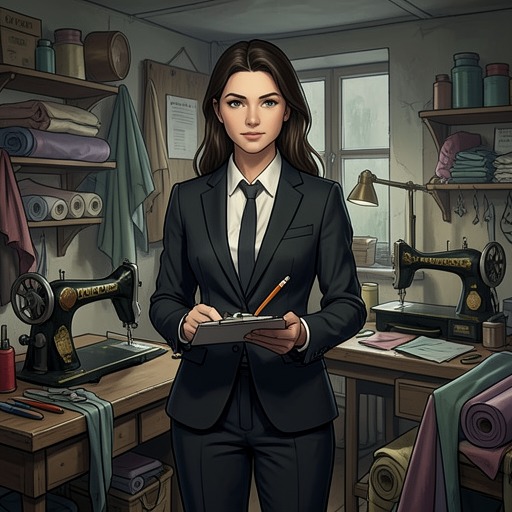
Her approach to manufacturing is equally cautious. In her workshop, Jonquil Spring helps rank the seamstresses interviewed for the project and questions whether some candidates are suitable. Jonquil suggests reconsidering the use of a manufacturer, but Trixie insists on retaining total control over quality while the line is new. Only after the brand becomes solid will she consider outsourcing production. This decision reveals the tension beneath the glamorous event: the show represents freedom and visibility, but its success depends on Trixie’s willingness to manage risk, labor, standards, and scale.
The event’s visual language is deliberately collaborative. Sadie and Kiki Ramirez contribute songs to the soundtrack, while Sadie and the other models present Trixie’s designs. The bar is divided by a makeshift runway, with gauzy fabric hanging from the ceiling and lighting arranged to make the venue feel like a single, playful bedroom. Trixie’s tagline, “Sexy and fun,” gives the staging a concise identity: the collection is sensual without being presented as solemn or inaccessible.
Course of the Fashion Show
The show begins with Sadie moving down the runway in lacy teal boy shorts and a matching Basque, wearing a fiercely seductive smile. The music supplies a pulsing rhythm, and each model receives the opportunity to turn the garments into an attitude rather than simply display them as products. The scene emphasizes that the line is performed through bodies, movement, color, and confidence; Trixie’s designs become legible as a brand because the models animate them in front of an audience.
Sadie later returns under softer, more sensual music. She wears white cheeky briefs with a matching bra and a silky duster fastened with matted silver buttons, while cherry-red stilettos provide a sharp color accent beneath the lights. Her coy smile and ability to flirt with everyone in the room make the presentation feel both controlled and exuberant. Trixie recognizes the combination as the image that could launch the line. Cameras flash, the bar erupts in applause, and the clothing acquires the public proof that private design work alone cannot provide.
Trixie then joins the models for the walk up the runway. Sadie winds her fingers together with Trixie’s, and the other models brush Trixie’s hands in congratulations as she passes. Flashing lights, smiling faces, and wolf whistles from Ty Scanlon and Dylan turn the final walk into collective affirmation. Trixie experiences the launch as a success: the line is officially introduced, the show has gone well, and she has achieved the professional milestone she had been postponing.
Emotional Stakes and Immediate Aftermath
The triumph carries an emotional absence. Trixie feels satisfied, but she also realizes that she has no one, not really, with whom to share the achievement. That vacancy makes Jack Thorpe’s presence especially charged. He stands at the front of the bar, smiling at her in a way that suggests she matters to him. She notices him without allowing the evening to become another episode in their unresolved sexual and romantic connection; the night belongs to her before it belongs to anyone else.
The contrast between the show and the earlier encounters surrounding Trixie’s lingerie work underscores the change in her position. Ty once teases her about “sexy underthings,” and Jack responds with jealousy when Ty touches her. Trixie also arrives at her first dinner with Jack in a deliberately constructed outfit of a white tank, visible red bra, black leather pants, knee-high boots, and a black leather jacket, a private performance of confidence complicated by nerves after their previous sex and conflict. At the fashion show, however, sensual presentation is no longer only part of flirtation or male attention. It is Trixie’s product, her staging, and her professional language.
Sadie refuses to let Trixie retreat into that uncertainty. After the final walk, Sadie squeezes her hand and tells her, “Smile girl this is your night!” before reminding her, “You did it!” Trixie answers with the recognition that she has done exactly that. The affirmation matters because the show gives her a public accomplishment while Jack’s earlier words have left her emotionally wounded. Rather than allow those words to define her, she channels her energy into the launch, the redesigned store, the website, and the event itself.
Narrative Significance
The Sexy Separates fashion show is a value shift from private intention to public authorship. Before it, Trixie Beaumont’s line exists as names, logos, sketches, plans, and quality-control decisions. During it, those fragments become garments on models, music in a crowded bar, photographs, interviews, and applause. After it, the brand has an audience and Trixie has evidence that her ambition can survive contact with the market.
The event also makes clothing a form of gender performance without reducing Trixie’s agency to appearance. The models use posture, smiles, color, and movement to produce the collection’s sensual identity, while Trixie organizes the conditions under which that identity is seen. The same visual vocabulary that earlier fuels Jack Thorpe’s desire is redirected into Trixie’s authorship and economic independence. Sexy Separates is therefore not simply a lingerie collection or a successful party; it is the moment when a woman’s deliberately staged image becomes the foundation of her own enterprise.
Its communal structure is equally important. Sadie, Kiki Ramirez, the models, Ty Scanlon, Dylan, and the audience all help make the launch visible, yet the achievement remains Trixie’s. The event gives her both community and separation: she is supported by friends, but she does not need Jack’s romantic recognition to validate the work. The fashion show’s applause confirms a new position for her in Mustang Prairie, one in which creative self-expression, commercial stability, and chosen community reinforce one another.